
Materials & technologies
What we build signs, letters and exhibition structures from, and how — so you know what you are paying for and can pick the option that fits the task and the budget.
Vinyl films
Most branding is film. Every film comes in matt or gloss.
- Full-colour print
- The image is printed on white film and applied to the surface. A clear laminate on top keeps the print from rubbing off or scratching during installation and use.
- Plotter cutting
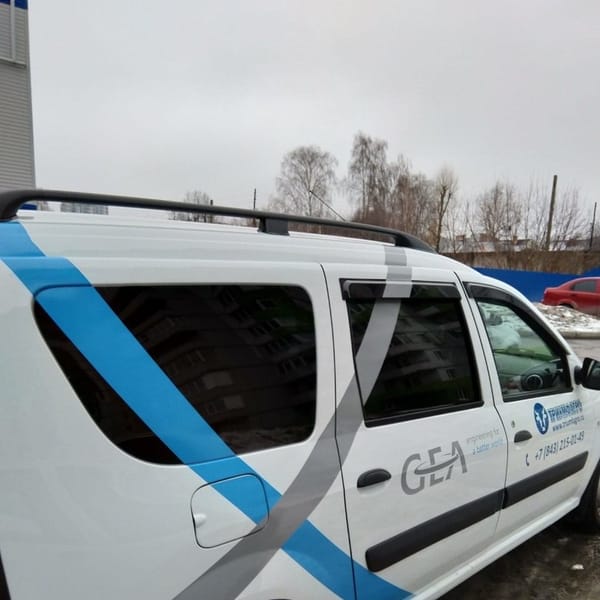
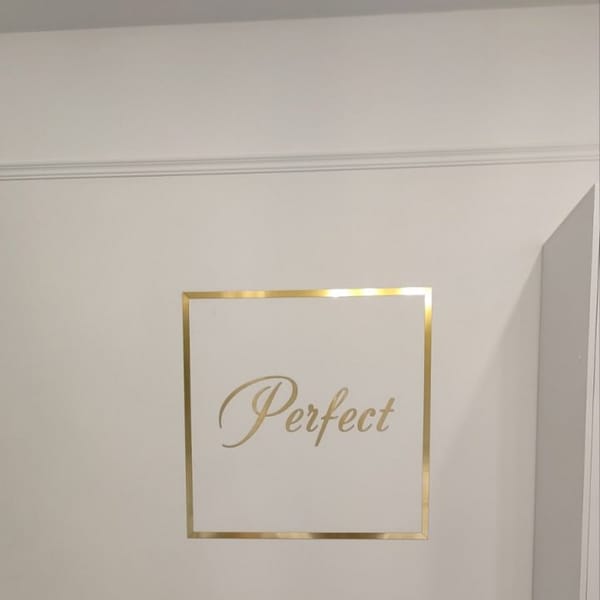
- Coloured Oracal film is cut along the outline, with no background. Opening hours on glass doors, stickers and vehicle branding are made this way. The colour is factory-made: brighter than print and it does not fade in the sun. Gold and silver can only be done like this. For colour matching we use the Oracal 641 palette, which brand books often specify.
- Translucent film
- Oracal 8500 and 8100 — for illuminated letters and lightboxes: backlit, they glow rich and even. Note that backlit silver looks almost white, gold looks yellow, and many colours look different by day and by night.
- Special films
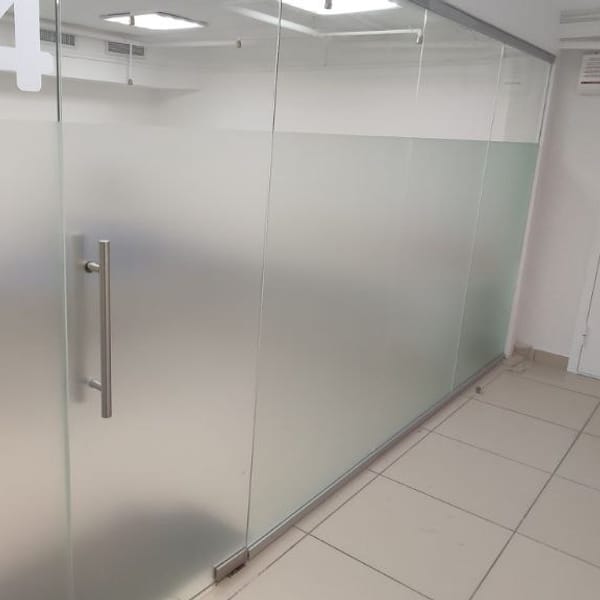
- Stained-glass — coloured and translucent. Frosted — for windows and glass partitions. Whiteboard — you can write on it. Foil — mirror gold and silver.
-
-


PVC, acrylic, polycarbonate
Rigid materials are the base for signs, plaques, built-up letters and decorative elements.
- Materials
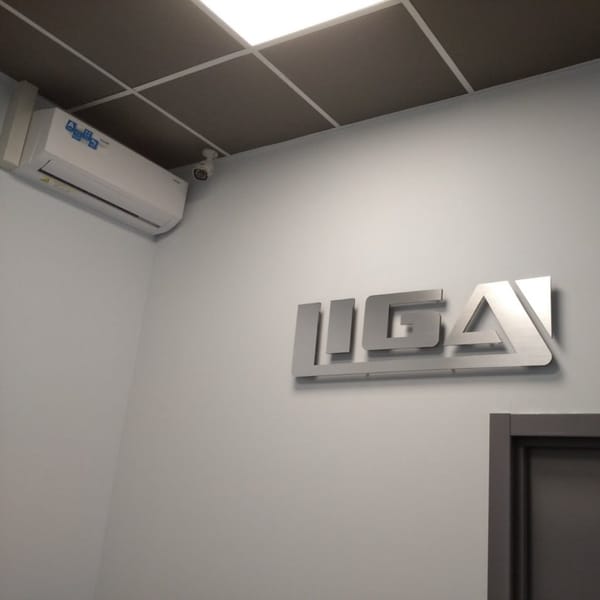
- PVC — white and coloured. Acrylic — clear, opal and coloured. Polycarbonate — clear and opal. Standard thicknesses are 3, 6 and 10 mm; gold- and silver-effect engraving plastic is 1.5 mm.
- Flat signs and plaques
- Laminated printed film is applied to PVC cut to shape. The alternative is UV printing straight onto the PVC: it fades less but costs 2–3 times more.
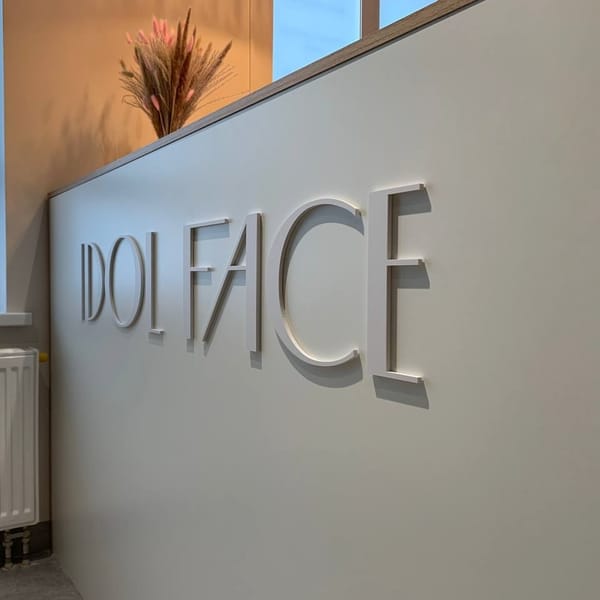
- Built-up letters and logos
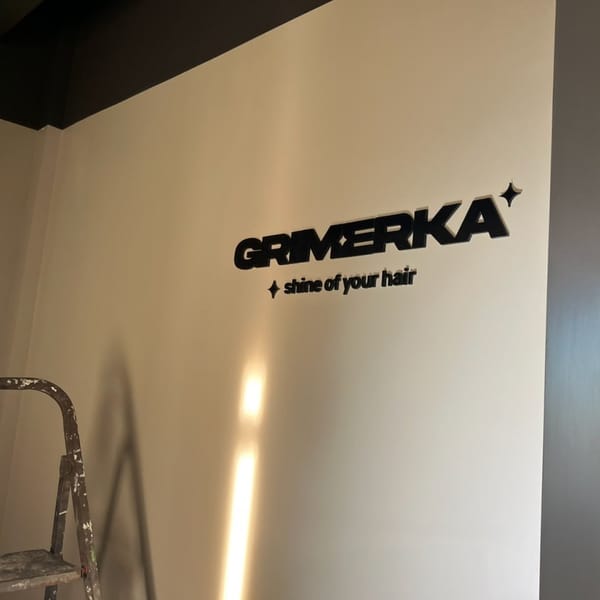
- Routed from PVC or acrylic, then painted, wrapped in film or made from coloured material. PVC gives a matt finish, acrylic a gloss one. Metal-effect letters are cut from engraving plastic.
- Fixing
- To the wall, to a backing panel or on stand-off fixings when the sign needs to sit off the wall. Fixings are usually hidden: the screws are covered by the letter on top.
- Interiors
- PVC is used to brand reception desks and furniture, and for engraved plaques.
-
-
-
-


Aluminium composite
- What it is
- Two 0.1 mm aluminium sheets with plastic between them, 3 mm in total. Sheets are 1.5 × 4 m and 1.22 × 4 m in factory RAL colours.
- Where it is used
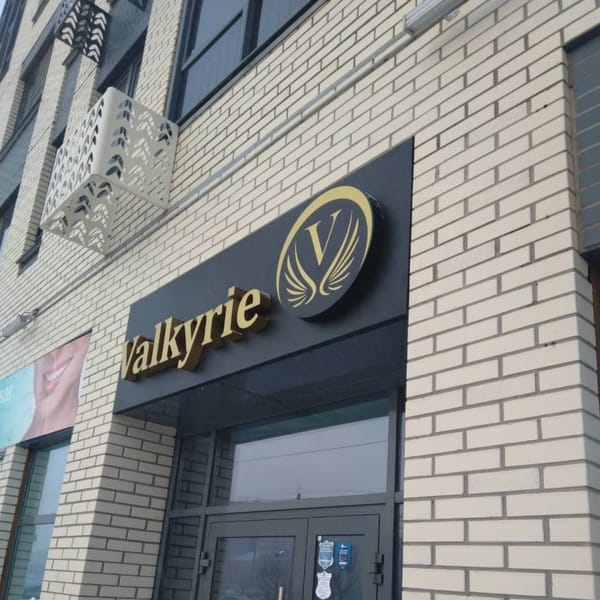
- Flat signs, facade panels, backing panels and boxes. Composite bends without cracking where PVC would break. Boxes start at 2 cm deep, typically 60–90 mm.
-
-


Non-illuminated built-up letters
- Foam letters
- Cut from 30 or 50 mm foam board, painted and installed. By day they look just like illuminated letters but cost considerably less — a good choice for exhibitions and malls.
- PVC facing
- We bond 3 mm PVC to the face: the surface comes out perfectly even, and multi-colour artwork is printed on film and applied to the PVC.
- Installation
- To the wall, to a PVC or composite backing panel, or to a metal frame with a PVC facing.
-
-


Illuminated signage
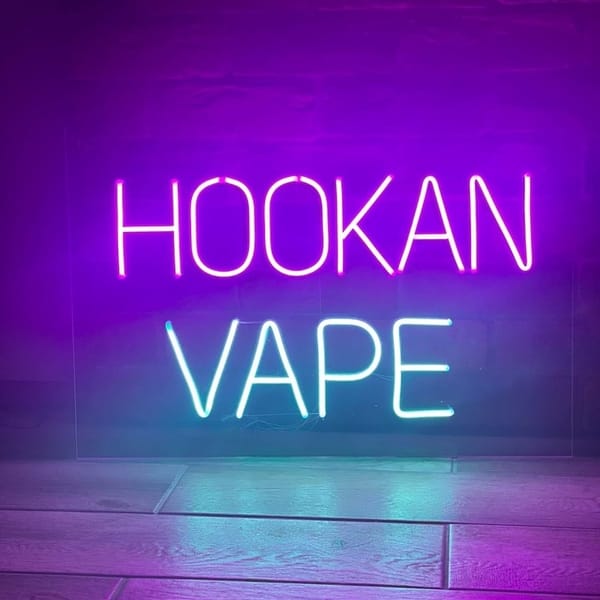
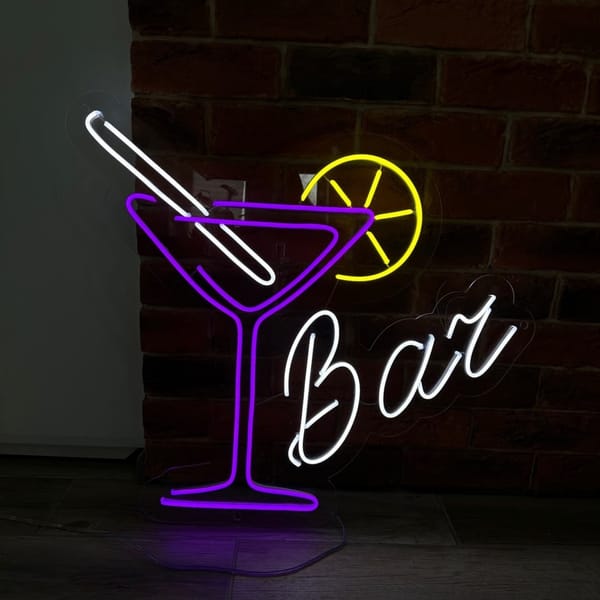
- Flexible neon
- The price depends on how many elements there are and how small they are. Neon is mounted on a 5 mm acrylic backing that carries the wiring between letters, and fixed on stand-offs or hung.
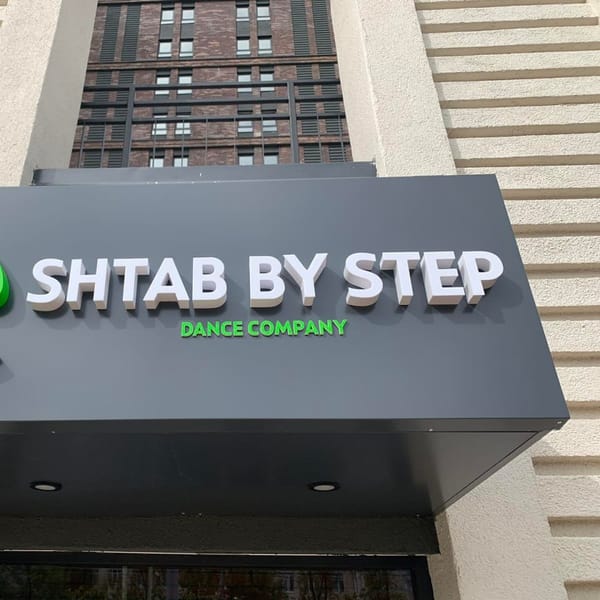
- Front-lit letters
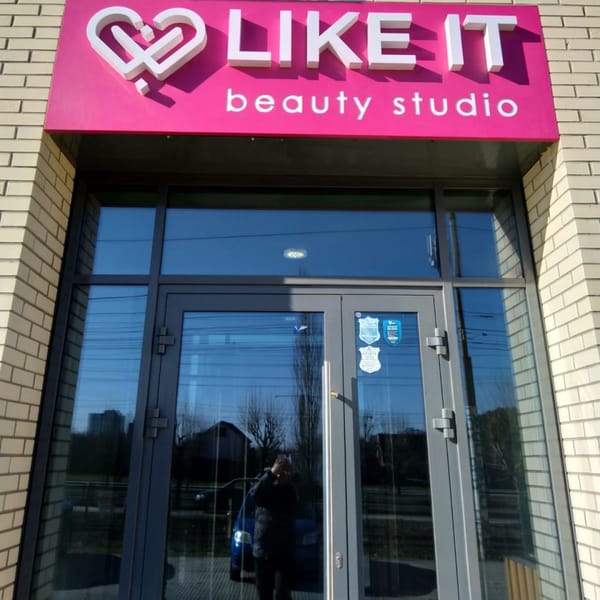
- The most common option. The face lights up, the sides do not; illuminated sides are possible but cost 3–4 times more for almost the same look. We specify the build in the contract: 3 mm acrylic face, Oracal film colour, 3 mm PVC returns, 6 mm PVC back, warm, neutral or cool LEDs.
- Mounting illuminated letters
- The wiring hides behind a gap from the wall. Three options: a composite backing box 3–4 cm deep; a metal frame in the facade colour, for outdoors; or straight onto the wall with the connections run through it — common in malls and photo zones.
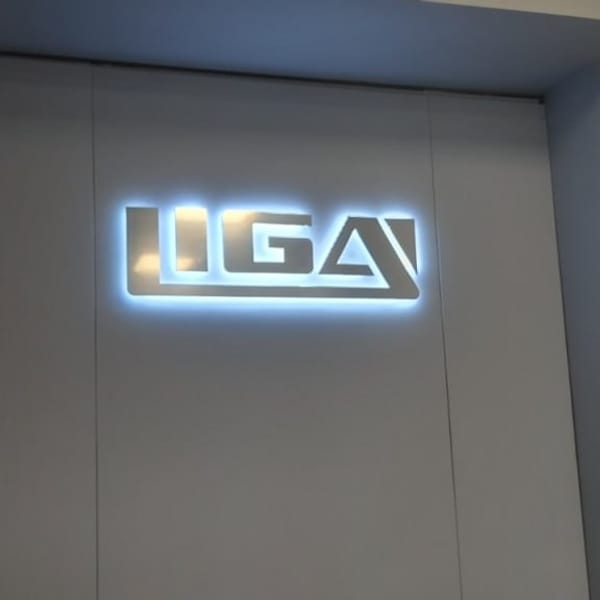
- Halo lighting
- The face stays dark and the light falls on the wall behind, creating a halo. It needs a light background: on a dark wall we apply white film slightly larger than the outline. Works best indoors.
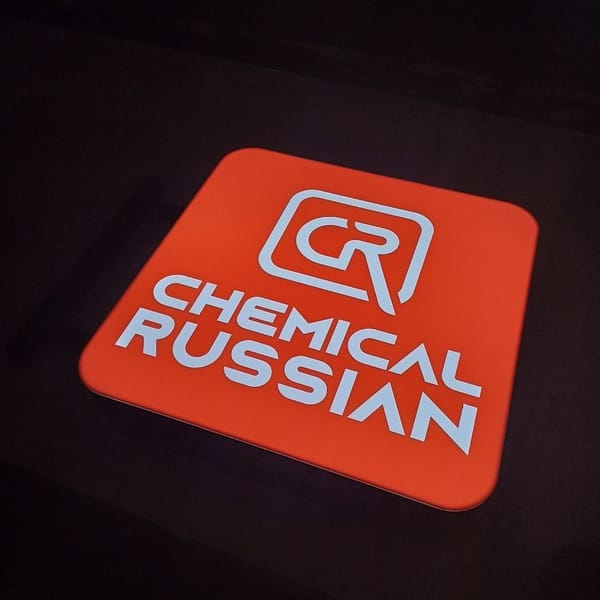
- Backlit plaques
- On acrylic for a clear background, on PVC for a coloured one. Affordable, striking and easy to install — well suited to exhibitions.
- Projecting sign
- A small sign perpendicular to an entrance, stand or mall unit: lit or unlit, flat or 3D, single- or double-sided. It catches passing footfall because it sits in a different plane, and helps when the main letters are left unlit to stay within budget.
- Lightbox
- Bulkier than letters but often cheaper. A profile box with an acrylic face glows across the whole surface. A composite box with inlaid lettering lights only the cut-out letters and reads as separate letters at night; small lettering too tight for an LED can only be done this way.
-
-
-
-
-

-


Exhibition structures
- Press wall
- A pop-up tube frame, standard size 3000 × 2000 mm. Above 3 metres, special connectors are used.
- Tension fabric frame
- Costs 3–4 times more than a press wall but is more stable: fixings are hidden and there are no eyelets on the face.
- Timber photo zone
- Not tied to the sizes of standard structures and sometimes easier to install.
- X-banner
- A light portable stand: assembles in 5 minutes, and the graphic is easier to swap yourself than on a roll-up.
- Roll-up
- A mobile stand in a carry case, set up in 5 minutes.
We’ll shape the scope around your budget
Tell us what you need and we’ll come back with options. Indicative prices are in our open price list; we’ll build an exact quote around your budget. Orders start from AED 2,000.